

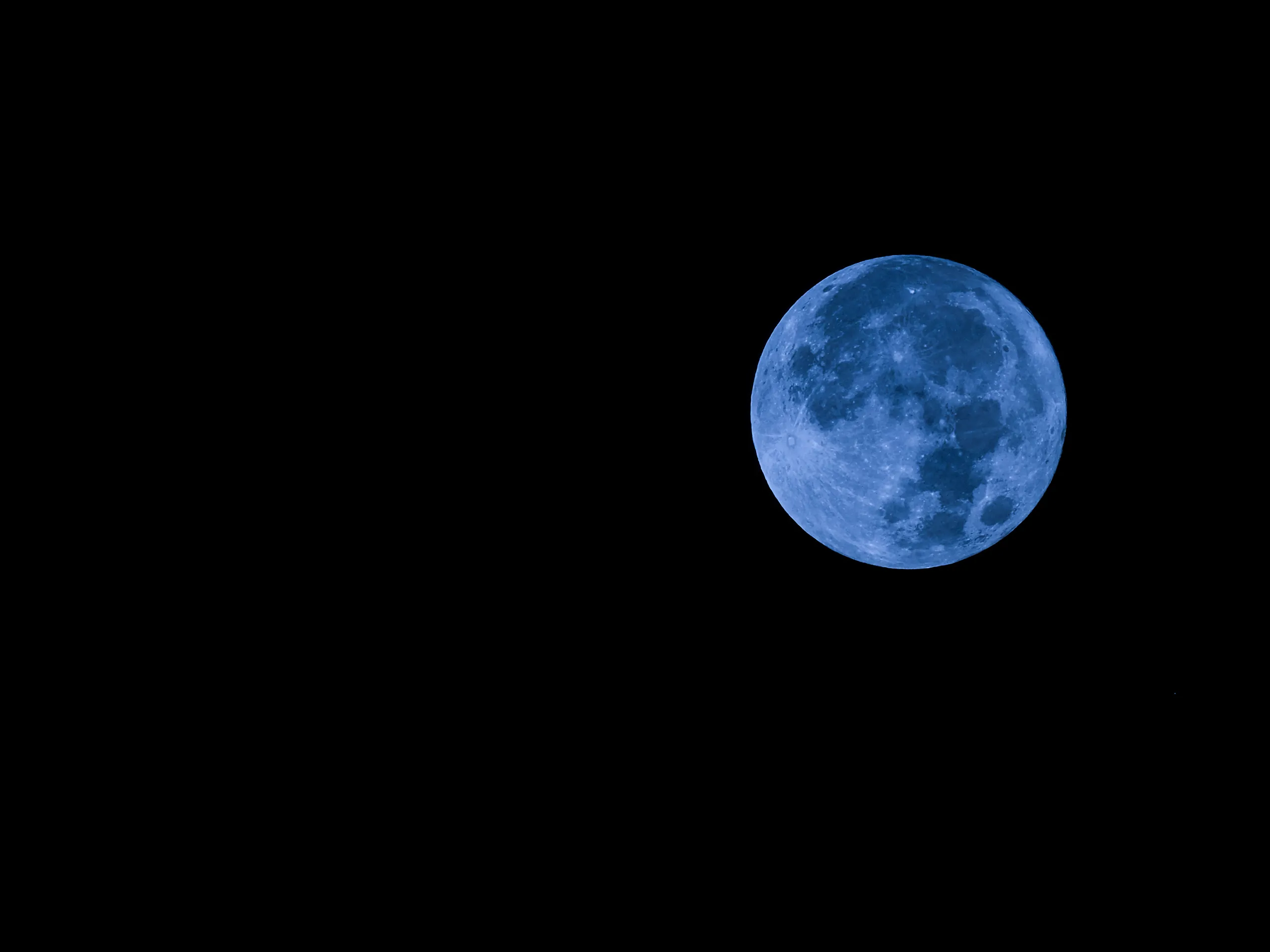
Skywatchers were treated to a rare astronomical event on Sunday as a Blue Moon coincided with the smallest full moon of 2026. The full moon on May 31 was not only the second full moon of the month a phenomenon known as a “Blue Moon”, but also occurred near the moon’s farthest point from Earth, making it appear smaller than usual.
A Blue Moon occurs when two full moons fall within the same calendar month, a result of the moon’s 29.5-day lunar cycle and the fact that most months have 30 or 31 days. This year’s full moons occurred on May 2 and May 31. Despite its name, a Blue Moon does not appear blue; the term simply refers to the timing of the event.
According to astronomers, Blue Moons occur only once every two to three years, with the next one expected in January 2029. Even rarer is the coincidence of a Blue Moon with the year’s smallest full moon, a phenomenon last seen in 2020.
The smallest full moon occurs when the moon reaches its full phase close to apogee, the point in its elliptical orbit where it is farthest from Earth. This year, the full moon peaked on May 31, while the moon reached apogee less than 20 hours later on June 1, creating the smallest full moon of the year.
Astronomers note that while the difference is difficult to detect with the naked eye, the smallest and largest full moons can vary in apparent diameter by about 14 percent and in visible area by roughly 30 percent. The year’s largest full moon is expected to appear on December 24, offering photographers and sky enthusiasts an opportunity to compare the two extremes.