

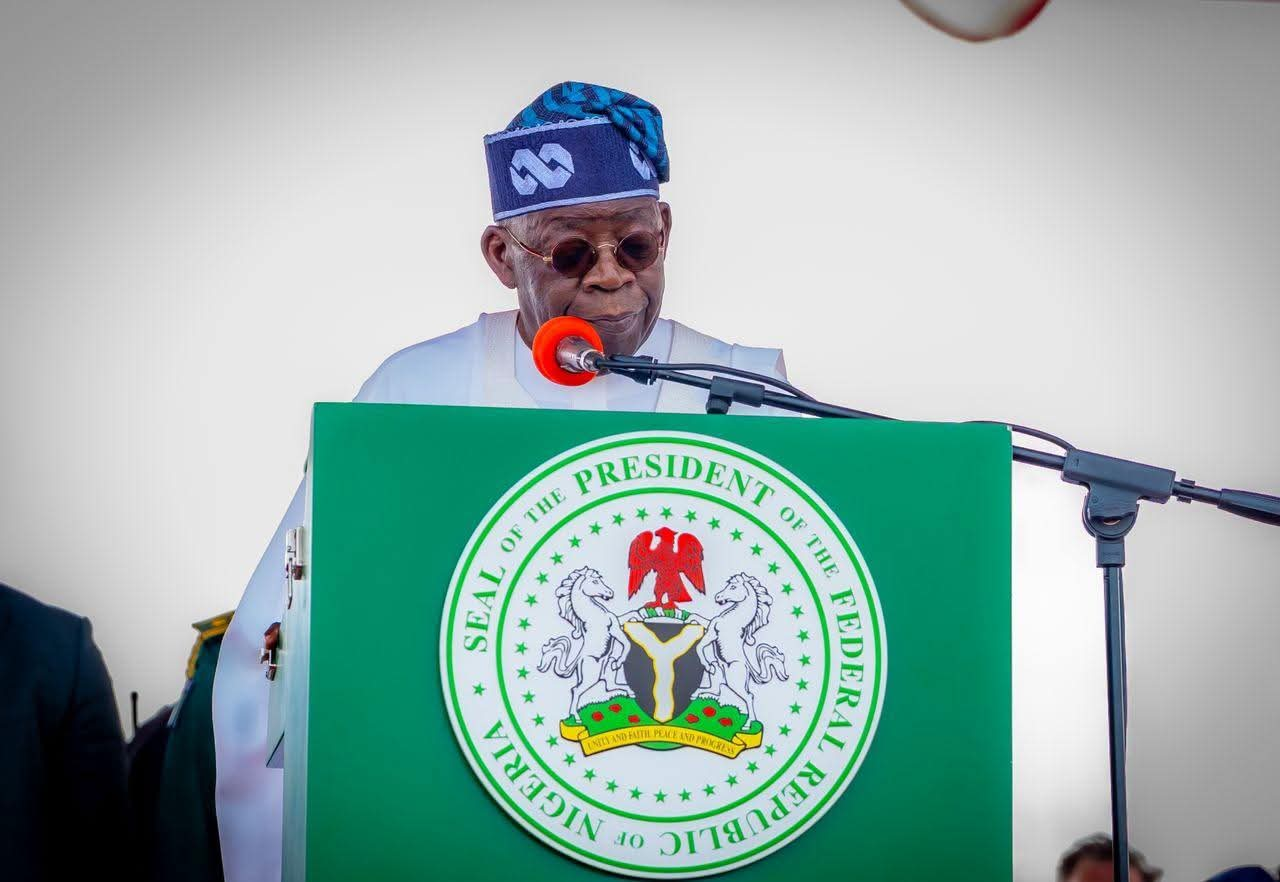
Nigerian President Bola Tinubu on Friday said the generation that secured democracy after the annulled June 12, 1993 election had fulfilled its historic duty.
He added that the current generation must now focus on achieving economic prosperity. Addressing the nation on Democracy Day, Tinubu said Nigeria had sustained 27 consecutive years of civilian rule since 1999, marking the country’s longest period of democratic governance.”The generation of our founding fathers secured independence – the generation of June 12 secured democracy. Our generation must secure prosperity,” he said.
Tinubu paid tribute to the late Chief M.K.O. Abiola, widely regarded as the winner of the 1993 presidential election, as well as other pro-democracy activists who endured imprisonment, exile and persecution during military rule.
The president called on electoral authorities, security agencies and political parties to ensure peaceful and credible elections in Ekiti and Osun states in the coming days, saying public confidence in the democratic process remained essential.
He also urged young Nigerians to contribute to national development by building careers and businesses at home rather than abandoning the country.
Tinubu acknowledged continuing security challenges, including the abduction of children in Oyo and Borno states, but said his administration had intensified efforts to combat terrorism, banditry and kidnapping.
He said the government had approved the recruitment of more than 50,000 police officers and thousands of military personnel, while allocating 5.41 trillion naira to defence and security in the 2026 budget. According to Tinubu, terror-related deaths have fallen by 81% since 2015, while more than 13,000 terrorists were neutralised in the past year.
He added that over 124,000 fighters and their dependants had surrendered through the government’s Operation Safe Corridor programme since 2023.
On the economy, Tinubu defended reforms introduced since taking office in 2023, saying they had improved fiscal transparency, increased government revenues and restored investor confidence.
He cited growth in investments across agriculture, energy, manufacturing, technology, mining and transportation, as well as increased domestic refining capacity and rising non-oil exports.
Tinubu said reforms in the electricity sector, including the implementation of the Electricity Act and efforts to close the country’s metering deficit, were aimed at improving power supply and supporting economic growth.
The President who acknowledged that many Nigerians have continued to face economic hardship, said the government remained focused on lowering inflation, boosting food production, creating jobs and raising living standards.
The Nigerian leader also announced plans to rename the Institute of Petroleum Studies in Kaduna after the late General Shehu Musa Yar’Adua in recognition of his contributions to Nigeria’s democratic development.
Tinubu further disclosed that national honours would be conferred on dozens of journalists, activists, politicians and military officers who played roles in the struggle for democracy.”June 12 reminds us: Nigerians do not break. We bend, we bleed, but we do not break,” he said.
Nigeria marks Democracy Day annually on June 12 to commemorate the 1993 election, regarded as one of the country’s freest and fairest polls despite its annulment by the military government.