

Ethiopians voted on Monday in parliamentary elections expected to deliver a decisive victory for Prime Minister Abiy Ahmed’s Prosperity Party, extending the leader’s grip on power amid concerns over political freedoms, armed conflicts and economic challenges.
Abiy, who has governed the Horn of Africa nation since 2018, cast his ballot in the Oromia region and pledged a period of major transformation if re-elected.”The coming five years will be a period of historic transformation for our nation,” Abiy told reporters after voting.
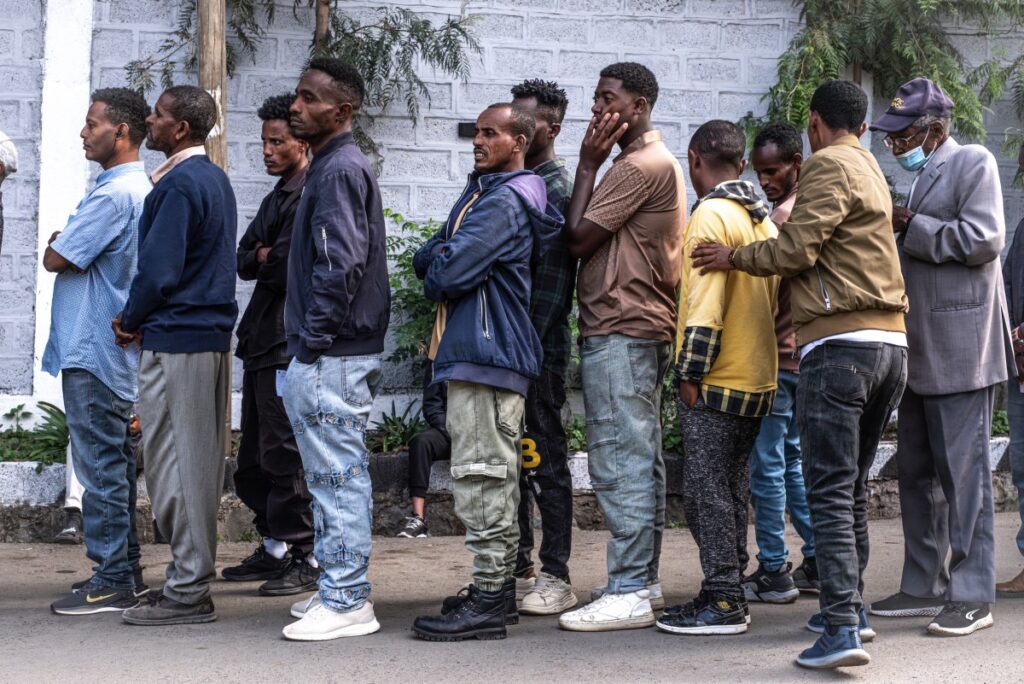
Polling stations in the capital, Addis Ababa, recorded long queues, with some voters arriving before dawn. Authorities later extended voting hours by six hours, allowing polling to continue until midnight.”It is a critical time to decide the fate of our country,” said Binyam Gideyelem, a 38-year-old telecommunications worker voting for the first time.
Analysts, however, said the election was unlikely to pose a serious challenge to the ruling party.
Prosperity Party won about 96% of parliamentary seats in the 2021 election and is running unopposed in dozens of constituencies in Monday’s vote.
Critics accuse Abiy’s government of increasing authoritarianism despite the reformist image that earned him the 2019 Nobel Peace Prize for restoring relations with Eritrea.Independent media face restrictions, opposition parties remain fragmented, and insecurity in several regions has complicated electoral monitoring, observers say.
Election board chief Melatwork Hailu said 143 of approximately 48,000 polling stations did not open because of security concerns, while voting was disrupted at some locations.
Political analysts at Chatham House said the election was likely to be among the least competitive since Ethiopia introduced multiparty democracy in 1991, noting that several opposition figures and groups were either in exile, imprisoned, banned or engaged in armed struggle.
No voting took place in the northern Tigray region, where tensions persist following the 2020-2022 civil war that displaced more than one million people.
The country also continues to face insurgencies in Oromia and Amhara, its two most populous regions. In Amhara, Fano militias have threatened to disrupt the electoral process, while the Oromia Liberation Army remains active against federal forces.
Aside its domestic challenges, Ethiopia faces strained relations with several neighbours. Somalia and Eritrea have criticised Addis Ababa’s efforts to secure direct access to the sea, while Egypt remains concerned about the impact of Ethiopia’s Grand Ethiopian Renaissance Dam on Nile water flows. Sudan has also accused Ethiopia of supporting Sudanese rebel groups.
Observers from the African Union and the Intergovernmental Authority on Development (IGAD) monitored the vote, while Ethiopia declined a European Union proposal to deploy election observers.Official results are expected by June 11.