

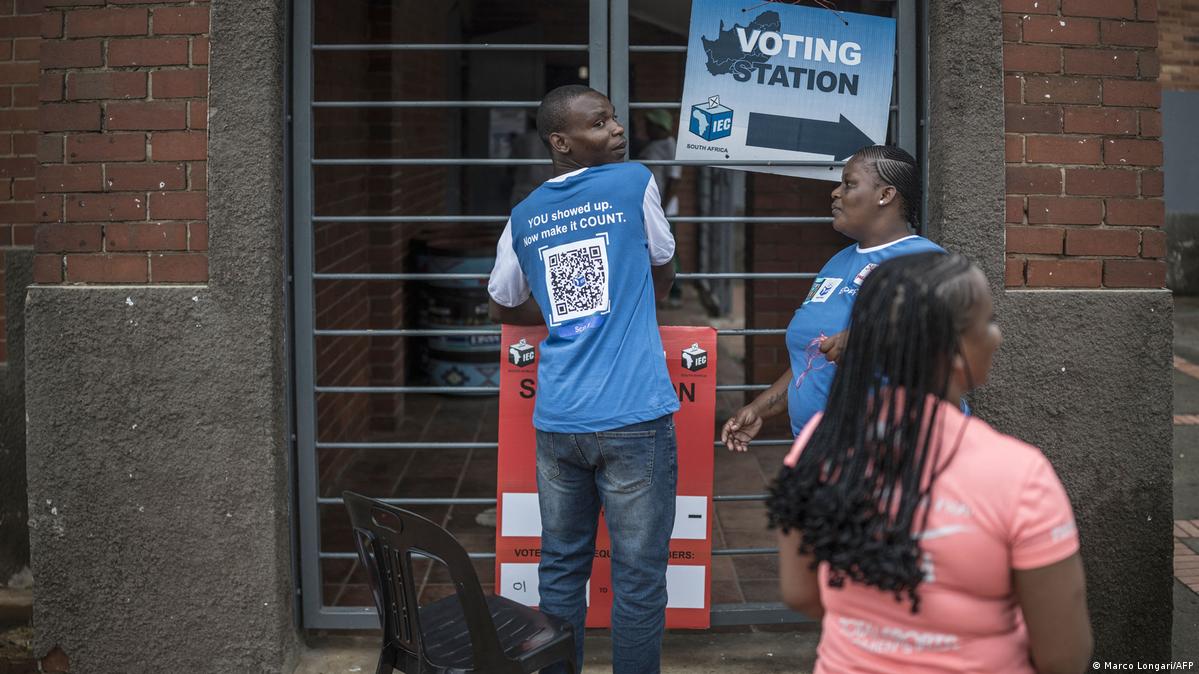
South Africa’s local government elections are being shaped by public frustration over water shortages, electricity failures, unemployment and deteriorating infrastructure, putting the ruling African National Congress (ANC) under renewed pressure.
South Africans headed to the polls on Wednesday in local government elections expected to test the ruling African National Congress (ANC) and determine control of 257 municipal councils across the country.
The elections are being closely watched as an indicator of the country’s political mood ahead of the next national elections in 2029.
The Electoral Commission said more than 3.5 million of the 29.2 million registered voters had cast their ballots by 10:00 am, when it released its first turnout figures.
In Johannesburg’s Soweto township, 27-year-old street vendor Moses Mashaba said he voted because living conditions had become increasingly difficult.
“Sometimes we don’t have water or electricity. There is also a high unemployment rate, which has been frustrating,” he told CliqMetro.
More than three decades after the ANC came to power following the country’s first multiracial elections in 1994, public dissatisfaction over failing infrastructure, persistent inequality and unemployment exceeding 30 per cent continues to challenge the party.
However, not all eligible voters were willing to participate.
Ntando Sithole, a 24-year-old car washer, said he stayed away from the polls because he believed elections would not bring meaningful changes.
He also criticised the dominance of older politicians, pointing to broken streetlights and insecurity in his neighbourhood.
Polling stations were scheduled to close at 9:00 pm local time, with counting expected to begin immediately. Final results were due by Sunday.
Although approximately 2.6 million voters were eligible to participate in early voting on Monday and Tuesday, only 1.4 million reportedly cast their ballots.
Ramaphosa Says South African Democracy Is Alive
President Cyril Ramaphosa, who also leads the ANC, defended the country’s democratic progress after casting his ballot.
“Our democracy is alive,” he said, recalling the historic 1994 elections that ended white-minority rule.
Ramaphosa also pledged renewed efforts to strengthen local government and improve service delivery.
“We as government are determined to rebuild our local government structure to ensure that what was promised… becomes a reality,” he said.
For some voters, the elections represent an opportunity to demand further improvements.
Phumla Zikhali, a 55-year-old nursing assistant in the coastal city of Gqeberha, said her life had improved since black South Africans gained the right to vote.
“Things were tough before then. My vote is for more change,” she said.
ANC Faces Growing Opposition Challenge
The ANC, which brought Nelson Mandela to power as South Africa’s first black president, remains projected to emerge as the country’s largest political party.
However, its electoral dominance has weakened considerably over the years.
The party lost its parliamentary majority for the first time in the 2024 general elections, securing just over 40 per cent of the vote and subsequently forming a coalition government with nine other parties.
Its support had already fallen below 50 per cent in the 2021 municipal elections.
The liberal Democratic Alliance (DA), South Africa’s second-largest party, is seeking to retain control of Cape Town while challenging the ANC in Johannesburg.
With no single party expected to secure outright majorities in several major cities, coalition negotiations could become central to determining the composition of local governments.
DA leader Geordin Hill-Lewis said his party was open to discussions with other political groups but would wait for the results before entering negotiations.
“We will talk to everyone but I don’t like to get into coalition negotiations before the votes have been counted,” he told CliqMetro.
Meanwhile, former president Jacob Zuma’s breakaway uMkhonto weSizwe (MK) party is mounting a strong challenge in Durban, where its campaign has drawn on Zulu identity.
Zuma had urged supporters to reclaim political influence in the coastal city.
Service Delivery Remains Key Election Issue
Political analysts say voters are increasingly concerned about everyday economic and social challenges rather than traditional party loyalties.
Kingsley Makhubela, a political analyst and former diplomat, said issues such as water supply, electricity, roads and sewage infrastructure were likely to shape voting decisions.
“People are not going to vote on sentiments,” he told CliqMetro.
The growing number of coalition governments could also reshape South Africa’s political landscape, encouraging negotiations among parties that have traditionally treated one another as political enemies.
The election is therefore expected to provide another indication of how voters view the ANC’s performance and the country’s increasingly fragmented political environment.