

In Iseyin, a quiet town in southwestern Nigeria, shaded corners beneath trees, narrow alleys and makeshift sheds hum with life. These humble spaces double as workshops for *aso-oke*, a richly textured handwoven fabric indigenous to the Yoruba people. Demand for the fabric has surged both locally and internationally, driven by the diaspora and the global rise of Nigerian fashion and music. Yet, even as popularity grows, artisans remain firm, as mechanisation, they say, would strip the fabric of its soul.
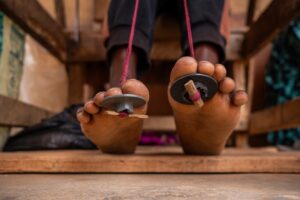
Yet the artisans making it are resisting mechanisation, insisting that handweaving is what makes it unique.
Roughly 200 kilometres from Lagos, Nigeria’s fashion capital, Iseyin is widely regarded as the spiritual home of aso-oke. Under the heat of the sun, yarns stretch across dusty compounds while weavers bend over wooden looms, producing narrow strips that are later stitched into vibrant cloths. The steady rhythm of weaving echoes through the town, a living tradition passed down through generations. Once limited in colour and crafted from locally spun cotton or silk, the process has evolved, with many artisans now using imported threads, often from China, to expand design possibilities.
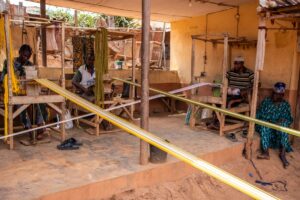
Yet the artisans making it are resisting mechanisation, insisting that handweaving is what makes it unique.
Young people, including university graduates, are increasingly drawn to the craft, seeing it as both cultural expression and economic opportunity. Designers collaborate with weavers to create bold, modern patterns, while aso-oke finds new life in everything from ceremonial attire to everyday fashion, shoes and accessories. Its global appeal has been amplified by high-profile appearances, including when Meghan Markle wore the fabric during a visit to Nigeria.
Despite this growth, attempts to mechanise production have largely failed. The work remains physically demanding, with long hours at the loom posing health challenges. Still, artisans insist that the painstaking process is what gives aso-oke its authenticity and value. Once reserved for royalty and the elite, the fabric now graces international runways in cities like London and Paris, even as concerns grow about cultural ownership and imitation.
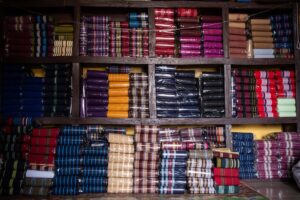
Yet the artisans making it are resisting mechanisation, insisting that handweaving is what makes it unique.
The experience of *adire*, another Yoruba textile already affected by foreign counterfeiting, serves as a cautionary tale. For aso-oke makers in Iseyin, preserving tradition is not just about resisting machines, it is about protecting identity, heritage and the delicate artistry that continues to define Nigerian culture on the global stage.
Leave a Reply