


Global charity Mary’s Meals marked the Day of the African Child by underscoring the importance of access to clean water and sanitation in supporting education.
The annual observance, established by the African Union in 1991, honours thousands of students who died on June 16, 1976, while protesting for their right to fair and quality education. This year’s theme, set by the African Committee of Experts on the Rights and Welfare of the Child, is “Ensuring universal access to water, sanitation and hygiene for every child in Africa.”
Fifty years after the tragic event, Mary’s Meals said it currently provides daily school meals to more than 2.65 million children in 10 African countries as part of efforts to improve school attendance and learning outcomes. Across the globe, the charity stated that it serves more than 3 million children in 16 countries.
The organisation said access to safe and reliable water remains critical to the success of school feeding programmes, particularly in regions where children face long journeys to collect water before attending classes.
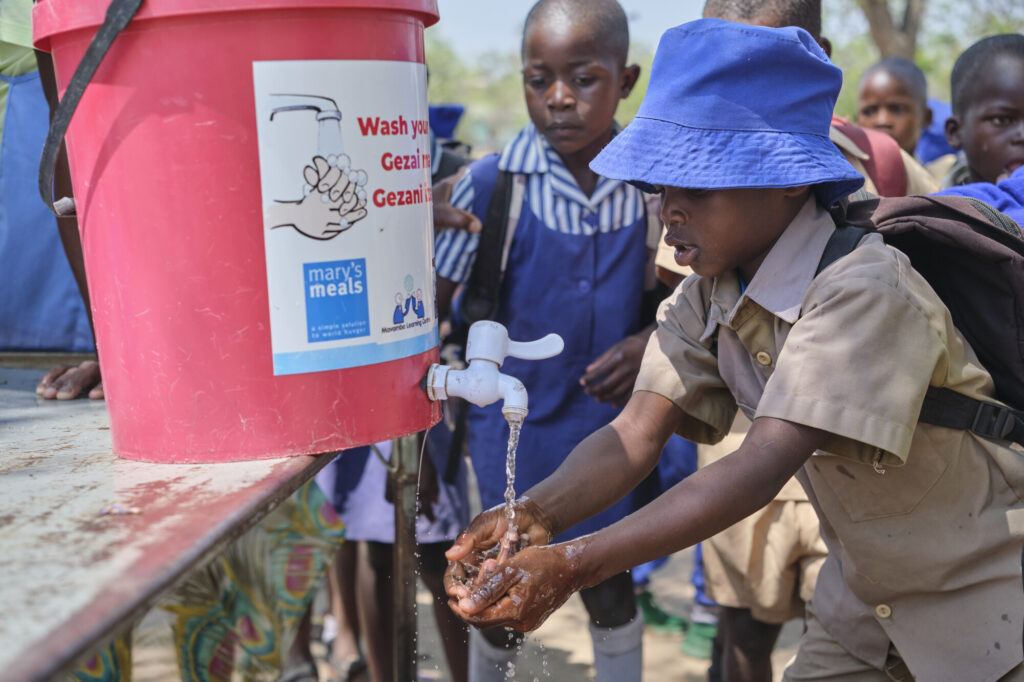
Globally, the charity serves more than 3 million children in 16 countries. The organisation said access to safe and reliable water remains critical to the success of school feeding programmes, particularly in regions where children face long journeys to collect water before attending classes.
Education is said to be a fundamental right of every child, as is clean and safe water. According to Research reliable daily meals served in school help to reduce hunger, increase energy, increase enrolment and attendance, and enable children to concentrate better in class. However, lack of water can still be a barrier to schooling, as illustrated by Nyawa, a pupil at Nkhuzyeni Primary School in Zambia.
Nyawa who lives close to her school must fetch water and complete household chores before attending classes. “I go with my friends to fetch water, never alone. There are bushes and thick vegetation along the way, and there are risks from both from people and animals,” she says.
“I want to complete my education to have a better life. I’d like to train as a nurse. I like my teachers, my friends, and I really like the Mary’s Meals porridge,” she added.
In Madagascar, families whose children receive daily meals in school revealed that re-enforcing of good handwashing and hygiene habits as part of the Mary’s Meals programme has had a great impact at home.

The charity says a safe water supply is an essential element of a successful school feeding programme and while water projects is not it specific focus, some of its delivery partners run complementary water projects alongside the school feeding programme.
“Our school feeding officers live in the communities and see the community day-to-day, which helps our understanding of the problems they face. This provides a strong foundation for our other work, such as addressing the need for clean drinking water. One of our programmes focuses on providing clean water through boreholes and hand pumps, and we are now prioritising schools involved in the school feeding programme for these interventions,” says Samantha Cameron, Programme Coordinator for one of Mary’s Meals’ partners in Madagascar.
According to UNESCO data, about 118 million children, adolescents and young people in Africa are out of school. Mary’s Meals said it reached more than 638,000 additional children in 2025, supporting over 1,280 schools across its African programmes.
The charity called for greater support to expand school feeding and water access initiatives across the continent, saying such efforts are vital to improving education opportunities and the future prospects of millions of African children.