

History has a habit of recognising its rebels long after their voices have fallen silent. The Grammys confer a Lifetime Achievement Award on Fela Kuti nearly three decades after his death. It is a landmark moment, making him the first African artist to receive the honour, but it also feels like a delayed apology from a global music establishment that once overlooked him. Fela was never built for easy acceptance. He was disruptive, unapologetic and fiercely political, using music not just as entertainment but as confrontation. His clashes with successive Nigerian governments were legendary, and his shrine was as much a cultural hub as it was a site of resistance.

What Fela created in the 1970s was more than a genre. Afrobeat, his fusion of jazz, funk and traditional African rhythms became a sonic language of protest, identity and pride. It gave Africa a distinct global voice at a time when its cultural exports were often marginalised. Decades later, that foundation has evolved into the global Afrobeats movement, a commercial and cultural powerhouse led largely by Nigerian artists. The Grammys’ introduction of the Best African Performance category, and its domination by acts like Tems, is not a sudden awakening but the continuation of a story Fela started. His fingerprints are everywhere in the swagger, the sound and the substance of contemporary African music.
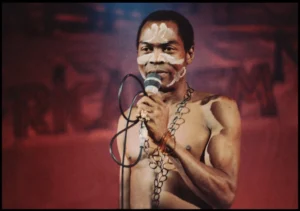
Beyond sound, Fela’s influence has seeped into the DNA of global pop culture. Artists such as Beyonce, Paul McCartney and Thom Yorke have all drawn from his work, directly or indirectly. Yet for all this influence, institutional recognition remained elusive during his lifetime. That reality underscores a broader pattern: African innovation often gains validation only after it has been filtered through global systems. The Grammy Awards, like many Western institutions, is now playing catch-up, acknowledging a legacy that audiences across the world have long embraced.
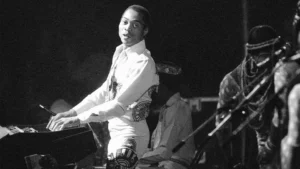
Still, the timing invites reflection. Why did it take nearly 30 years after his death for this recognition to arrive? Why was a man who redefined music, politics and cultural identity not honoured sooner? The answers lie partly in Fela’s defiance. He did not court approval; he challenged power. He rejected compromise and refused to sanitise his message for global palatability. In many ways, that made him difficult to celebrate within systems that often reward conformity over confrontation.

Today, his legacy is not frozen in history. It is alive, evolving and defiant. His sons, Femi Kuti and Seun Kuti, along with his grandson Made Kuti, continue to carry the Afrobeat torch, blending tradition with modern urgency. Their work is proof that Fela’s vision was never just about one man; it was about a movement. A movement that refuses to be silenced, diluted or forgotten.
In the end, this Lifetime Achievement Award is both a celebration and a reckoning. It affirms what millions have always known that Fela Kuti was not just an African icon, but a global force. But it also reminds us that recognition, when delayed, carries the weight of what was missed. The world may finally be applauding, but Fela’s message has been echoing all along.
Leave a Reply