

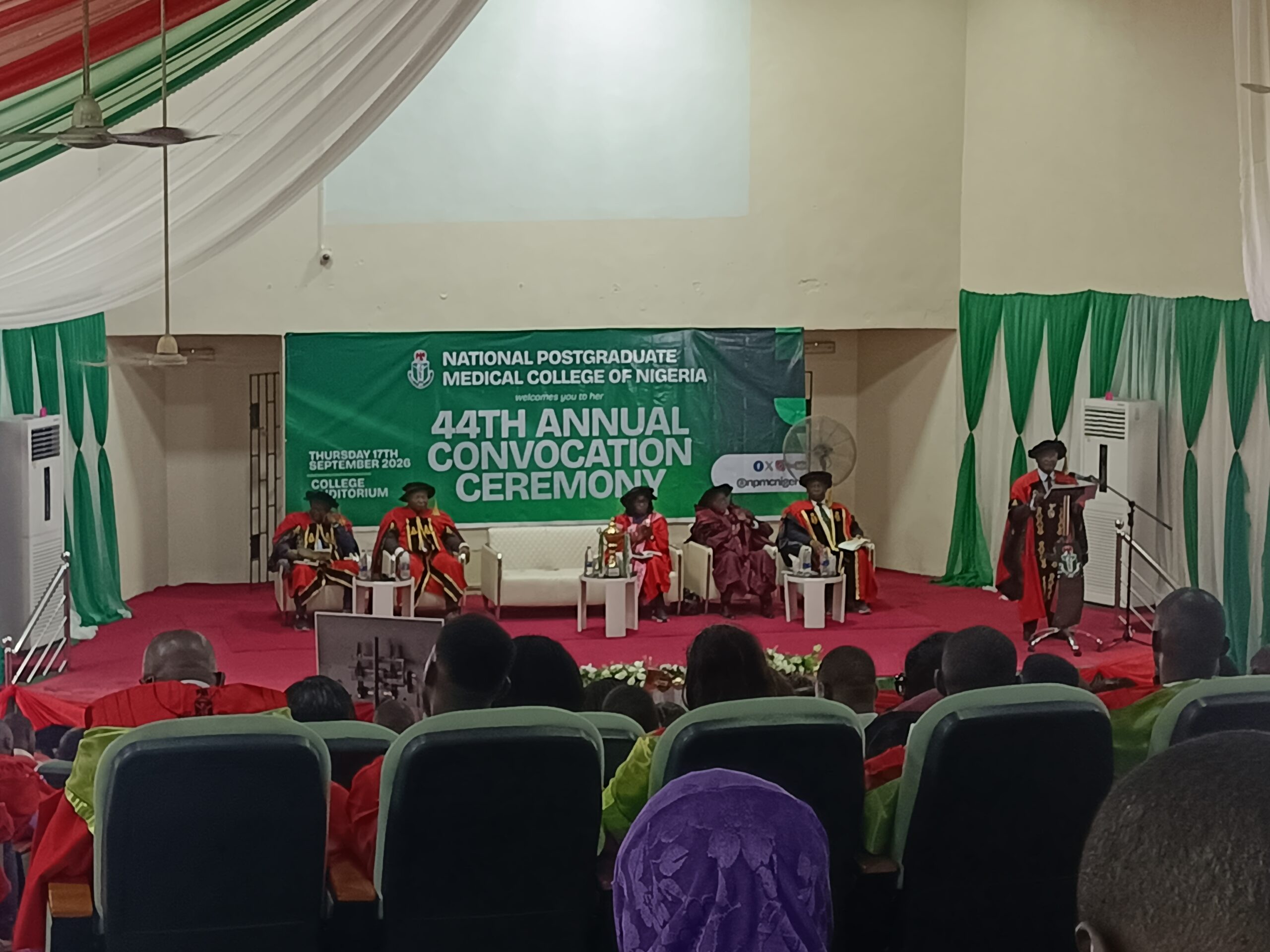
The Director-General of the Nigerian Institute of Medical Research (NIMR) says Nigeria needs to strengthen the link between medical practice, research, law and ethics while developing more physician-scientists to improve healthcare and translate research findings into patient care.
Dr. John Obafunwa, a senior pathologist made the call in a lecture delivered at the 44th Annual Convocation of the National Postgraduate Medical College of Nigeria.
Obafunwa, said the country’s health system required stronger integration of clinical services, postgraduate medical education, research governance and legal and ethical standards.
He said doctors were increasingly required to balance three responsibilities patient care, teaching and research making it necessary for postgraduate training to provide adequate preparation in medical ethics, health law and research.
“Medicine, law and ethics do not operate in silos,” Obafunwa said, stressing that the three areas influence clinical decisions, postgraduate training, research governance and public trust.
He said medical training should expose students to clinical forensic medicine and medical ethics from the early stages of their education and reinforce the subjects during clinical and postgraduate training.
Obafunwa said doctors should be trained to understand informed consent, patient confidentiality, duty of care, standards of treatment, proper documentation, reporting obligations and basic forensic procedures.
He also urged doctors to maintain objective and timely medical records, seek second opinions where necessary, report errors promptly and participate in investigations aimed at preventing their recurrence.
He warned against altering medical records to conceal mistakes, dismissing patient concerns or responding defensively when medical disputes arise.
The NIMR director-general said postgraduate medical colleges should make medico-legal and ethics training a core component of specialist education, backed by workshops, simulations, ethics consultations and clear dispute-resolution procedures.
Physician-scientist Gap
Obafunwa said Nigeria’s medical research system faced a significant shortage of physician-scientists — doctors trained to conduct independent biomedical research and translate clinical observations into scientific discoveries and patient care.
Using NIMR as a case study, he said only seven of the institute’s 59 research fellows were medically qualified, while five were Fellows of postgraduate medical colleges.
NIMR has 278 staff, meaning medical doctors account for a small proportion of its research workforce, he said.
Obafunwa said the shortage could weaken the connection between clinical realities and research priorities, limit mentorship for younger researchers and reduce the translation of scientific discoveries into medical practice.
He identified heavy clinical workloads, inadequate research funding, weak career incentives, regulatory delays, brain drain and differences in conditions of service between research institutions and universities as major obstacles.
He called for protected research time for clinicians, formal physician-scientist career tracks, joint appointments between universities and NIMR, and stronger infrastructure for translational research.
Such infrastructure, he said, should include biobanks, data platforms, biostatistics expertise and research support systems.
MBBS-PhD pathway
Obafunwa also proposed that the Medical and Dental Council of Nigeria consider introducing MBBS-PhD programmes in medical schools.
He said the pathway could encourage the development of physician-scientists from an early stage, while allowing graduates to subsequently pursue residency training in their chosen specialties.
He further called on the National Postgraduate Medical College to establish a formal physician-scientist track combining advanced clinical training, translational research and ethical and legal governance.
The proposed programme would provide protected research time during residency and fellowship, structured mentorship, research projects aligned with national health priorities and measurable milestones for publications, grants and progression into research leadership.
He said incentives should include dedicated research funding, recognition of clinical-research achievements in promotion decisions, career development support and opportunities for joint appointments with research institutions.
Six-point reform agenda
Obafunwa organised his recommendations around six areas: institutional strategy; training and mentorship; funding and incentives; governance and compliance; collaboration and networks; and operational improvements.
He called for stronger partnerships among postgraduate medical colleges, hospitals, NIMR, universities, government health agencies and international research institutions.
He also proposed centralised ethics and legal support for hospitals and postgraduate training programmes to help streamline research approvals, risk assessments and regulatory compliance.
Research training, he said, should include ethics, biostatistics, data governance, health law, clinical trial design and responsible conduct of research.
He urged institutions to establish standardised consent forms, data-sharing agreements and incident-reporting procedures for research involving patients and human data.
“Clinicians should emerge not only as skilled practitioners but also as leaders who can oversee ethically conducted research, mentor junior colleagues and advocate for policies that protect participants and patients,” he said.
Obafunwa said strengthening the relationship between medicine, research, law and ethics would help Nigeria develop a health system capable of delivering better patient care while producing research that responds to the country’s health priorities.