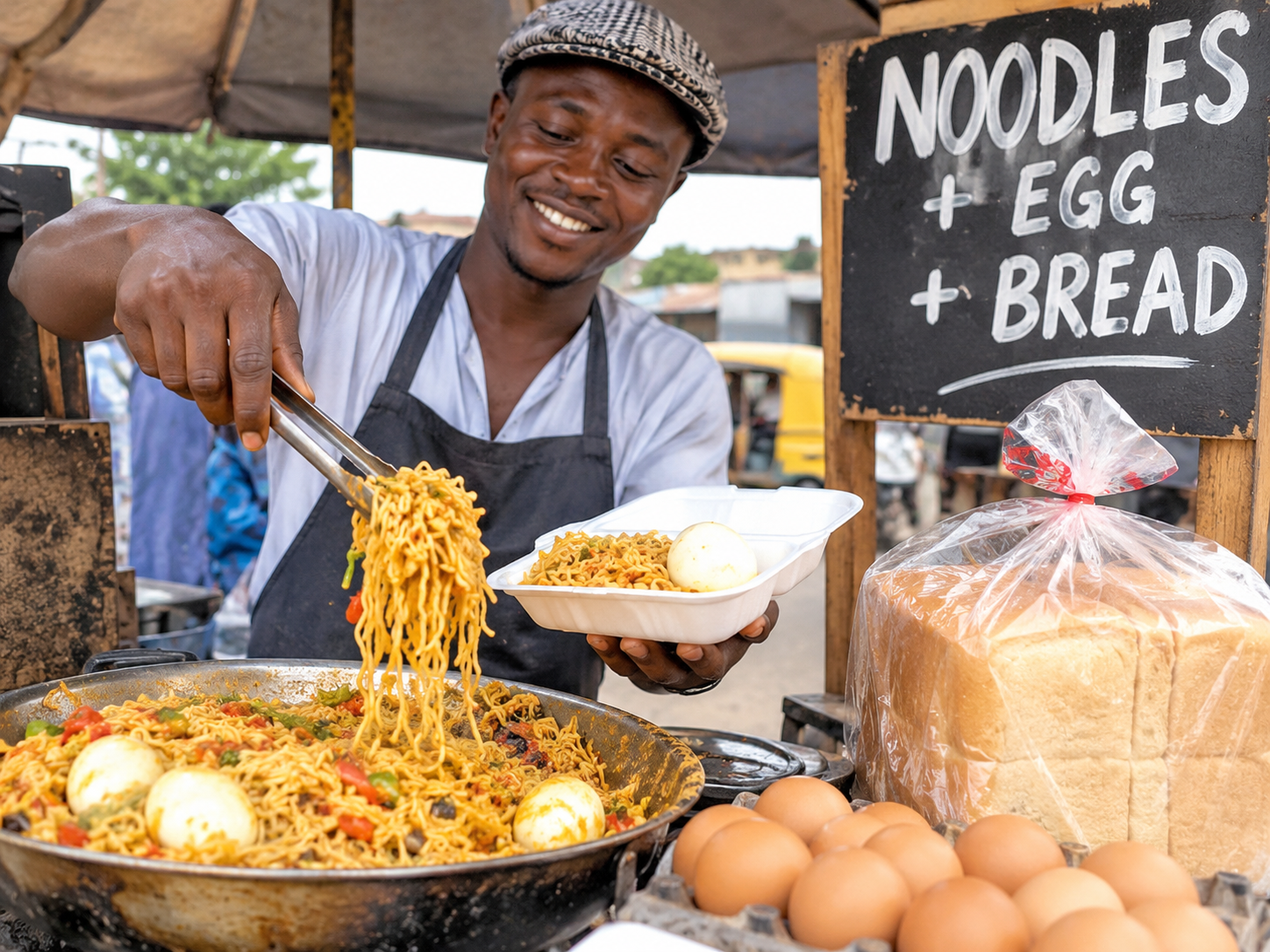
In the restless rhythm of Lagos, where mornings begin before sunrise and nights stretch long after the city should have gone to sleep, a humble loaf of bread, an egg and a sizzling hot coffee offer more than a quick meal. They offer comfort, convenience and, sometimes, the strength to keep pushing. Welcome to the world of Mishai.
There is a familiar sound on certain Lagos street corners: the sharp hiss of hot oil meeting a pan, the crack of eggs against a bowl, the rhythmic chopping of onions and peppers, and the gentle press of bread against a hot surface. It is the sound of another order being prepared, another hungry customer waiting, another day being sustained by one of Nigeria’s beloved street foods.
For some, it is breakfast before the hustle. For others, it is dinner after a long shift, a quick fix between appointments or a late-night rescue when the stomach refuses to understand that the day is over. Whatever the hour, the promise is simple: bread, egg and something warm enough to make the day’s burdens feel a little lighter.
They call it Mishai.
Also spelt Meshai or associated with the Hausa expression Mai Shai, this humble street-side sandwich has grown from the culture of roadside tea and egg vendors into a food and culinary experience that reflects the creativity, resilience and the changing appetites of urban Nigeria’s stomach infrastructure.
The provenance of Nigeria’s street fast food
To understand Mishai, one must first understand the Mai Shai.
Rooted in Hausa street-vending culture, the expression Mai Shai or Mai Tea refers to a tea seller. Traditionally, these vendors served hot tea and other beverages alongside bread, fried eggs and, in some places, noodles. Their makeshift stalls(a wide umbrella, a long table and bench) became familiar stopping points for travellers, night workers, traders, artisans, drivers and early-morning commuters looking for an affordable meal before returning to the demands of the day.
The setting was often modest: a roadside kiosk, a few benches, a gas burner or stove, and a vendor whose growing list of happy customers is testimony to the importance of the service received. There is no elaborate dining room, no carefully designed menu and certainly no need for an online reservation. Hunger brings people to the stall, and the vendor (Mai Shai) knows how best to alleviate same.
As the culture travels and became embedded in cities across Nigeria, particularly in the west, the name evolved in everyday speech. Mai Shai became Meshai or Mishai in popular usage, while the food associated with the stalls acquired an identity of its own.
The original combination was uncomplicated. Eggs were beaten with onions, fresh pepper and seasoning, fried and tucked into a soft loaf of bread, often the stretchy, slightly sweet ‘Agege bread’ that generations of Nigerians have come to love.
It is filling, accessible and relatively inexpensive. More importantly, it is available when many kitchens were closed and when preparing a meal at home was not a practical option.
Mishai is never merely about combining two ingredients. It is about bringing food closer to the people who needed it, sharp!
Over time, that straightforward sandwich began to change. What was once a simple egg filling has evolved into a generous combination of flavours and textures. Sardines, sausages, shredded carrots, cabbage, suya, cheese and salad cream now find their way between slices of bread. Some vendors (Mai Tea) add chicken or other fillings, while others experiment with sauces and vegetables to create their own signature versions and also at the request of the consumer.
Social media, particularly TikTok and Instagram, has helped bring these more elaborate creations into the spotlight. Videos of oversized sandwiches being filled, buttered, pressed and toasted have made Mishai as much a visual attraction as a meal.
The preparation remains reassuringly familiar. Eggs are whisked with chopped vegetables and seasoning, then fried. The bread is opened and filled, sometimes with additional ingredients, before being placed on a hot pan. Butter or oil gives the outside a golden crust, while the heat warms the filling and softens the inside.
The result is a sandwich that is crisp on the outside, soft within and adaptable to almost any appetite or pocket.
Yet, beneath the modern toppings and social-media attention, the original appeal remains unchanged: simple food, prepared quickly, for people who need to eat.
Between dinner and breakfast
In Lagos, time is a strange thing. The city can demand your presence before the sun rises and keep you occupied long after darkness settles. The daily commute, traffic congestion, unpredictable work schedules and the pressure to make ends meet often leave little room for elaborate meal preparation. For the thousands who leave home early and return late, food must fit around life. This is where Mishai earns its place.
Walk through busy neighbourhoods, transport corridors and commercial streets, and the familiar roadside food stall may be waiting at a corner. The vendor stands behind a pan, ready to turn bread and eggs into a hot meal for someone on the move.
In the morning, customers arrive with the urgency of people racing against the clock. Some have barely had time to get dressed before stepping out. Others have spent hours travelling from distant neighbourhoods, hoping to beat the rush to work. A Mishai sandwich becomes a convenient first meal, eaten with a cup of tea, Nestle’s coffee or sachet water before the next journey begins.
By evening, the customers change, but the hunger remains. A shop assistant closing for the day, a security guard beginning a night shift, a commercial or ride hailing driver waiting for the next passenger or a worker returning home after hours in traffic may all find themselves drawn to the same stall. For those who live alone, share crowded accommodation or spend most of their waking hours outside the home, a roadside vendor can be an important part of the daily food routine.
There is no strict breakfast or dinner rule here. Mishai belongs to the hours when hunger arrives. It is fast food in the most practical sense of the phrase: food that is accessible, prepared on demand and eaten without ceremony. It does not require a table set for dinner or the luxury of waiting for a full meal to be cooked. It fits into the gaps that modern urban life leaves behind.
For many customers, the attraction is not simply speed. It is the combination of warmth, familiarity and convenience. Watching the vendor prepare an order, choosing the ingredients and receiving a sandwich straight from the pan offers a small measure of satisfaction in a city where so much of the day feels hurried and uncertain.
And because the sandwich can be made in different sizes and with varying fillings, customers often have some control over what they spend. A basic bread-and-egg combination may serve someone looking for a straightforward meal, while a more heavily loaded version appeals to those willing and able to pay for extra ingredients. Prices, of course, vary with location, portion size and the cost of ingredients. But the underlying idea remains the same: a quick meal that meets an immediate need.
More than bread and eggs
To dismiss Mishai as just another street snack is to overlook the people and routines that keep it alive.
Behind every sandwich is a Mai Tea who must rise early, source ingredients, manage fuel costs and prepare for a steady stream of customers. The business may operate from a small kiosk, a makeshift roadside stand or a modest shop, but it requires planning, skill and an understanding of what people want.
The vendor must know when to prepare the eggs, how to keep the bread fresh, how much filling to use and how to serve customers without keeping them waiting. In a competitive street-food market, taste and consistency matter. So do friendliness, location and the ability to offer something that fits the customer’s budget.
For some operators, selling Mishai is a means of earning a living and supporting a household. For others, it is part of a broader menu that includes tea, noodles, fried eggs and other quick meals. Either way, the stall represents a small but significant piece of Nigeria’s informal food economy.
It also reflects the ingenuity of the Nigerian street food. The country’s food culture has always been shaped by adaptation: making familiar ingredients stretch further, combining flavours from different traditions and turning everyday necessities into meals that people look forward to.
Mishai captures that ingenuity. Its foundation is simple, but its possibilities are almost endless. One Mai Tea may swear by the classic egg-and-pepper filling, while another adds sardines, vegetables and sausage. A third may introduce cheese or suya, transforming the sandwich into something more substantial.
There is room for tradition and experimentation in the same frying pan.
However, its popularity also raises questions about the realities of eating on the move. A sandwich can be filling, but the nutritional value depends on its ingredients, portion size and preparation. Vegetables can add fibre and variety, while excessive butter, oil, salt or heavily processed fillings can make some versions less balanced. Safe food handling, clean water, fresh ingredients and proper storage are equally important, particularly in a street-side setting.
These considerations do not diminish Mishai’s place in the food landscape. They underline the need to make convenient food safer and, where possible, more nutritious for the people who depend on it.
A taste of the city’s survival instinct
There is something deeply revealing about the foods that become popular in a city like Lagos. They tell us how people work, how they travel, how they spend and how they adapt when time and money are limited. Mishai belongs to that category of everyday food that rarely receives the attention given to restaurant menus or elaborate culinary traditions, yet remains woven into the lives of ordinary Nigerians.
It is the meal bought with the last few minutes before a shift begins. The sandwich shared between friends after a long day. The late-night purchase that saves someone from going to bed hungry. The breakfast that stands between a weary commuter and an even longer morning.
It is also a reminder that food does not always have to be complicated to matter.
Sometimes, what people need is not an elaborate spread but a hot, satisfying meal within reach. A vendor who recognises a regular customer. The smell of bread browning in butter. The first bite of a warm sandwich after hours spent navigating traffic, deadlines and the demands of making a living.
In a city that rarely pauses, these small comforts have their own value.
Mishai… saving lives
Perhaps “saving lives” sounds dramatic for a sandwich made with bread and eggs. But spend enough time observing and listening to rhythms and sounds of Lagos, and the phrase begins to make sense.
Not every rescue is spectacular. Sometimes, it is a meal that keeps a worker going through a night shift, a quick breakfast that prevents a commuter from facing the morning on an empty stomach or an affordable dinner for someone too exhausted to cook after work.
Mishai does not solve the city’s cost-of-living pressures. It cannot erase the long commute, guarantee a day’s earnings or take away the fatigue of working through the night. But, for a moment, it answers one of life’s most basic questions: what are we going to eat?
The story stretches from Hausa tea stalls to the busy streets of southwestern Nigeria, from the simplicity of fried eggs and Agege bread to today’s elaborate, camera-ready creations. Through every variation, the central idea endures: make something satisfying, make it accessible and make it when people need it.
So, as the city wakes and sleeps in shifts, the pans continue to sizzle. Bread is sliced, eggs are beaten, onions are chopped and sandwiches are pressed against hot metal. Another customer steps forward, money changes hands, and another meal finds its way into waiting hands.
Give us this day, our daily bread.
And when the day is long, the night is cold, the journey is far and the kitchen is out of reach, let there be a Mishai vendor at the corner… ready to turn a humble loaf and a few eggs into one more reason to keep going.
In Lagos, sometimes, survival comes toasted.